

Table of Contents
- Top 10 Splunk On-Call (VictorOps) Competitors for 2026
- 1. FluidifyAI Regen
- 2. New Relic
- 3. Opsgenie (Atlassian)
- 4. OnPage
- 5. AlertOps
- 6. FireHydrant
- 7. PagerDuty
- 8. Resolver
- 9. Datadog Incident Management
- 10. xMatters
- Final Comparison
- Conclusion
The era of VictorOps has transitioned into the age of Splunk On-Call. Since the 2018 acquisition, Splunk has integrated the platform into its massive observability suite, rebranding and expanding its feature set along the way.
While Splunk On-Call is undoubtedly a powerhouse of innovation, its enterprise-first DNA comes with a specific set of trade-offs. For many, the "Splunk tax" is real: lower-tier plans often feel stripped of necessities, like advanced incident merging or sufficient notification quotas, forcing smaller teams into expensive upgrades just to cover the basics.
If you’re looking for a more agile or cost-effective way to manage your uptime, here are the top 10 alternatives to consider in 2026.
1. FluidifyAI Regen
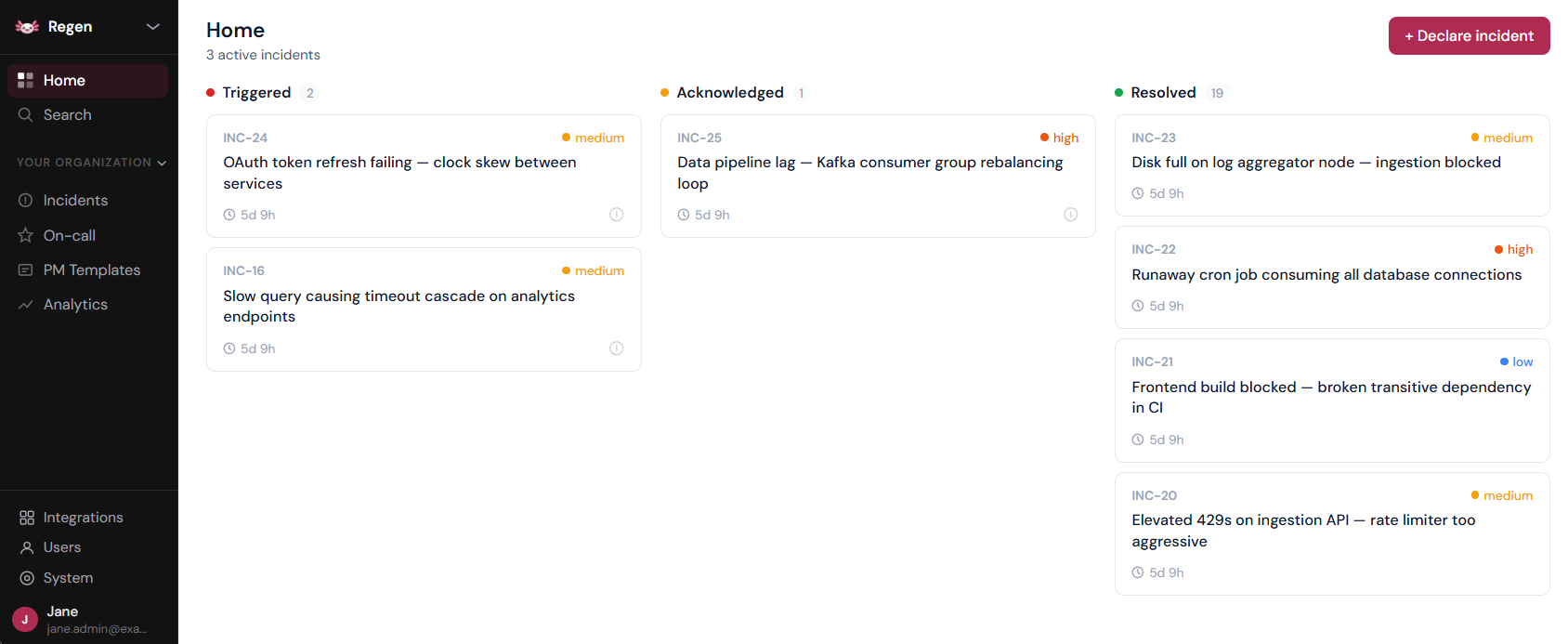
FluidifyAI Regen is an open-source incident management platform built for teams tired of paying $100k/year for fragmented SaaS tools. It combines alerting, incident coordination, and AI-powered post-mortems in a single self-hosted system, giving you the control of running your own infrastructure with the intelligence layer you'd expect from modern incident tooling.
Unlike vendors that treat incidents as ticket workflows, Regen treats them as knowledge artifacts. Every alert, status change, and timeline note is immutably recorded. When the dust settles, AI generates your post-mortem from the actual incident data, not from memory two days later.
🌟 Primary Capabilities
- Alert ingestion: From any source (Prometheus, Grafana, CloudWatch, generic webhooks)
- Multichannel communication: Immutable incident timelines with Slack/Teams integration
- BYOK AI: AI post-mortems generated from real incident data (bring your own API key)
- On-call Scheduling: On-call scheduling with layer-based rotations and escalation policies
➕ Advantages
- Data sovereignty: Self-hosted, your incidents never leave your infrastructure
- No SSO paywall: SAML included in the free tier, not gated behind an upsell
- one-click migration: Drop-in Grafana OnCall replacement
- Complete tool package: AGPLv3 community edition is a complete tool with AI premium features
💲 Pricing
Community (AGPLv3)is Free, unlimited users, includes SSO/SAML. Enterprise includes SCIM provisioning, audit log export, RBAC, retention policies.
2. New Relic
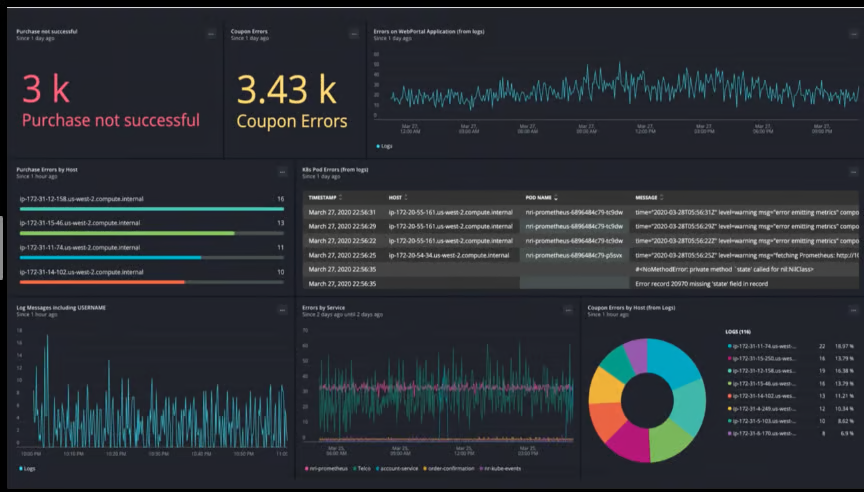
New Relic positions itself as an "Intelligent Observability" platform. It relies heavily on AI to perform "Alert Noise Reduction," learning your system's patterns over time to group related issues automatically. Instead of a barrage of pings, you get a single, context-rich report that points toward the root cause.
➕ Advantages
- Full-Stack Visibility: See everything from the front end to the database in one UI.
- AI-First: Applied intelligence proactively identifies correlations you might miss.
➖ Limitations
- The "Notification Gap": While it detects issues brilliantly, it often relies on external tools like PagerDuty or Opsgenie to handle the actual "calling" and "scheduling" side of on-call.
💲 Pricing
Follows a consumption-based model. You get a generous free tier, then pay based on data ingest and additional "Full Platform" users.
3. Opsgenie (Atlassian)
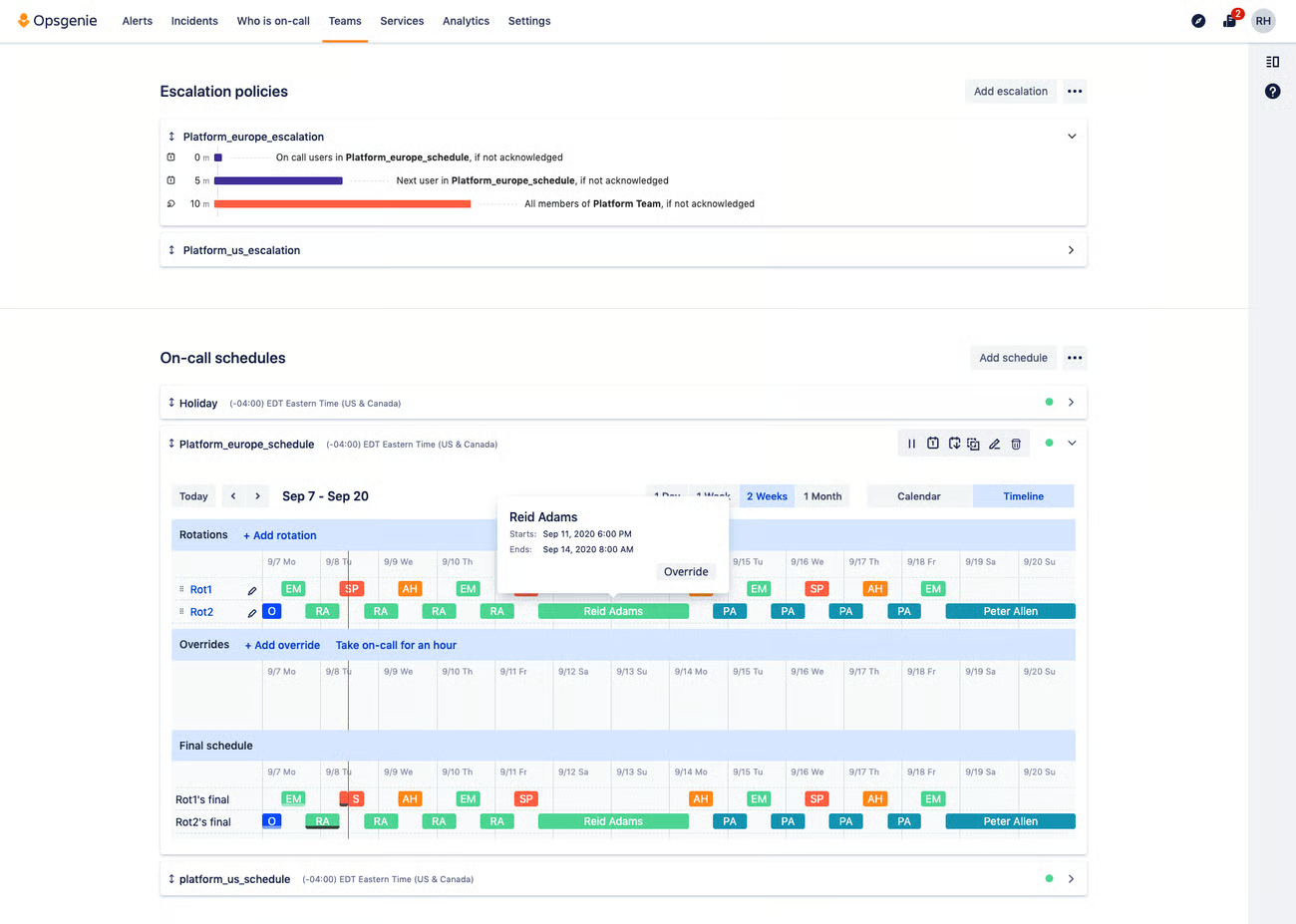
As part of the Atlassian family, Opsgenie is the natural choice for teams living in Jira and Confluence. It’s highly regarded for its "Incident Investigation" tool, which allows responders to see exactly which code deployments align with the start of an outage.
➕ Advantages
- Deep Integration: Unmatched synergy with the Atlassian suite.
- Advanced Routing: Handles complex "corner case" escalation rules with ease.
💲 Pricing
Free for teams up to 5 users. Paid tiers scale based on user count, offering unlimited alerts and advanced post-incident analytics in the higher brackets.
4. OnPage
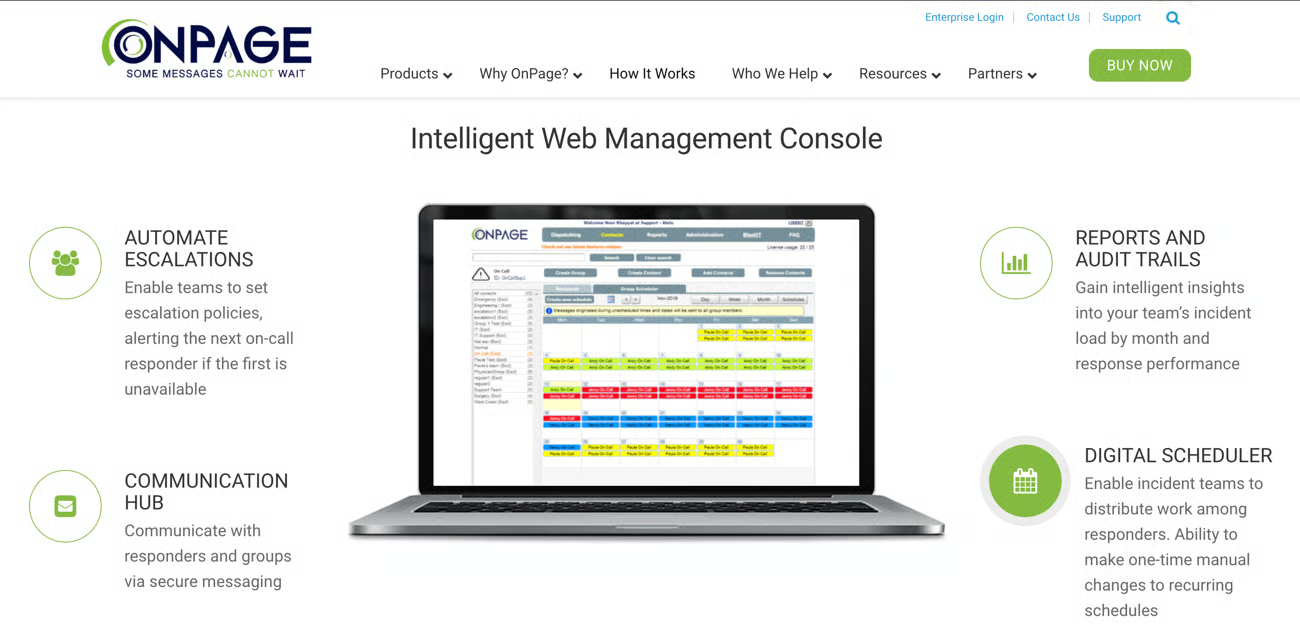
OnPage is built for those who cannot afford to miss an alert: think Healthcare, MSPs, and critical Infrastructure. It focuses on "Alert-Until-Read" persistence, ensuring that a notification keeps buzzing until a human actually acknowledges it.
➕ Advantages
- Persistent Alerting: High-priority notifications that bypass "Do Not Disturb" settings.
- Sector-Specific: Specialized workflows for HIPAA compliance and mission-critical business continuity.
💲 Pricing
Typically quoted based on the specific industry sector and team size.
5. AlertOps
AlertOps aims to move "beyond management" and into IT Automation. It’s a versatile tool that stands out by including Heartbeat Monitoring (great for tracking database backups or cron jobs) in its standard plans, a feature often charged as an add-on elsewhere.
➕ Advantages
- White-Glove Support: Famous for their personalized onboarding experience.
- Smart Routing: Dynamically routes alerts based on the time of day or the specific technical expertise required.
💲 Pricing
Free "Starter Pack" for up to 5 users. Paid plans scale based on the level of automation and heartbeat monitoring required.
6. FireHydrant
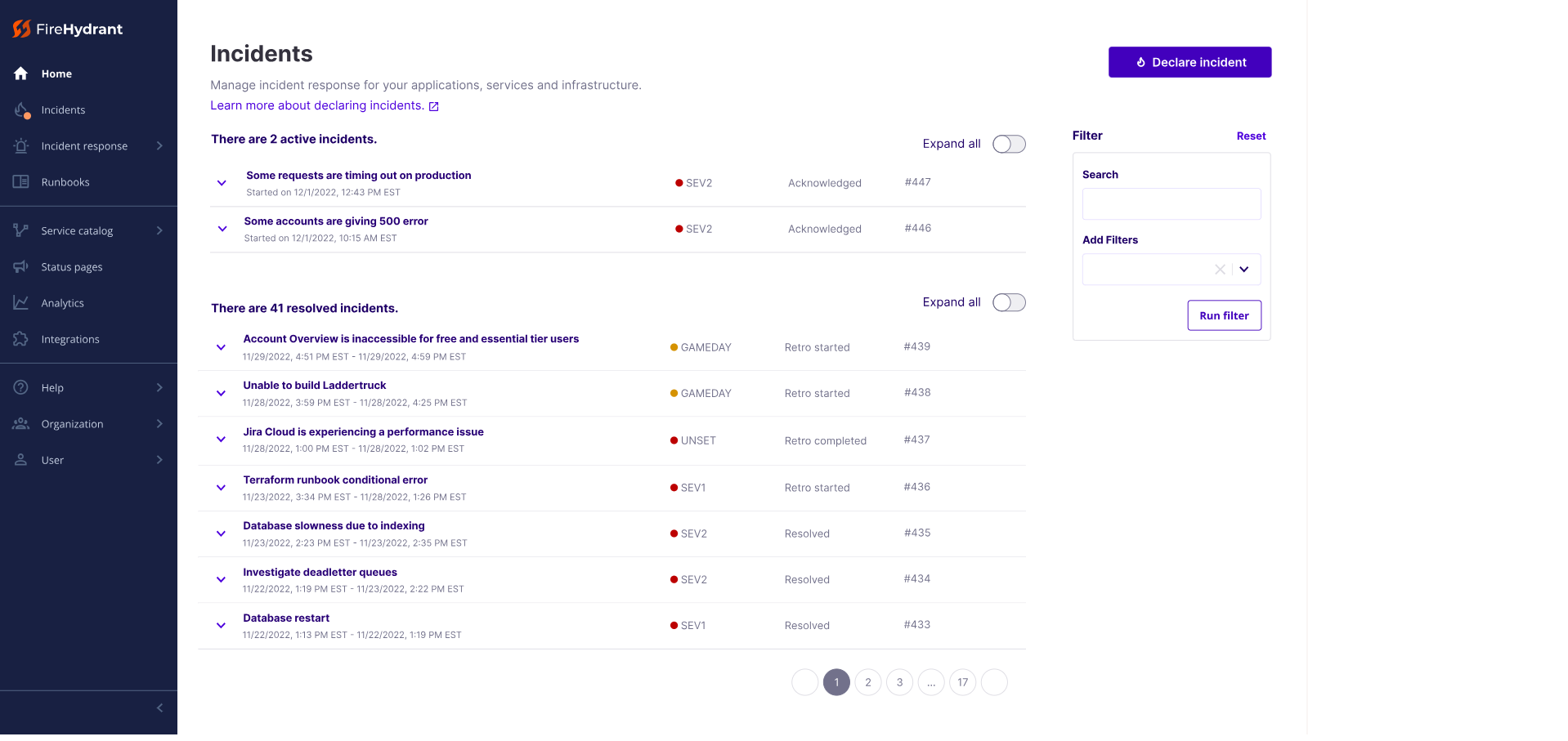
FireHydrant is less about the "ping" and more about the "process." It treats every incident like a story, providing a service catalog that documents exactly who owns what. It tracks every deployment change, creating a living timeline of your infrastructure’s evolution.
➕ Advantages
- Service Catalog: Maintains a "source of truth" for team roles and service ownership.
- Automated Logic: Can automatically spin up Slack rooms and Zoom links the moment a SEV-1 is declared.
➖ Limitations
- The pricing model can be restrictive for smaller teams looking for the "cool" automation features.
💲 Pricing
Paid plans typically start at higher annual commitments, targeting mid-to-large engineering departments.
7. PagerDuty
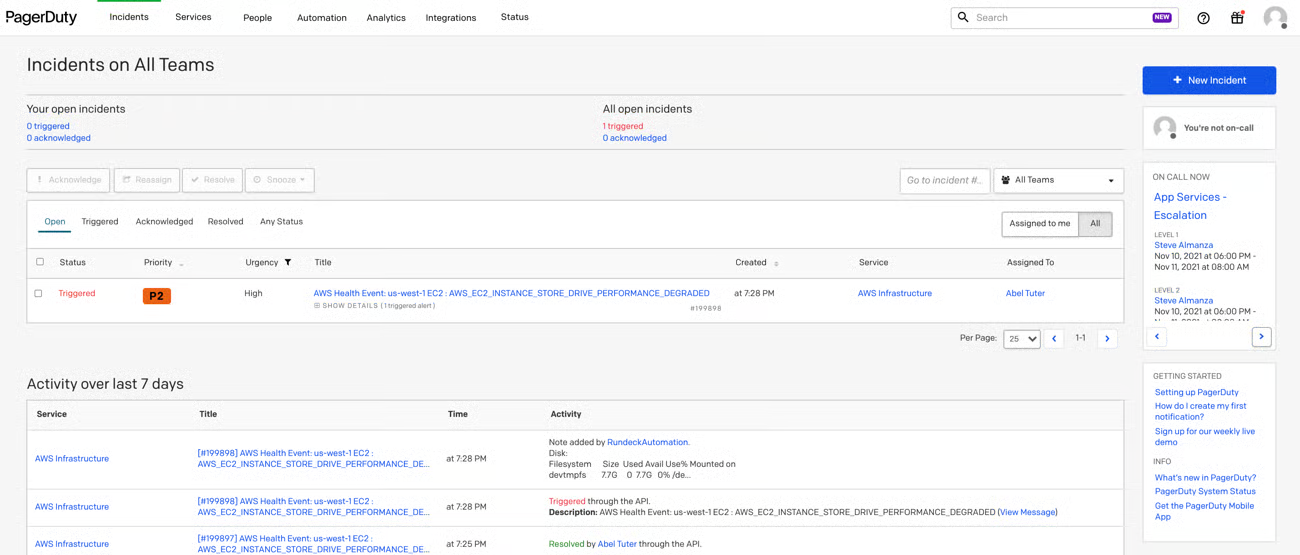
The "Gold Standard" for many, PagerDuty uses years of data to refine its adaptive learning. It is excellent at reducing noise and preventing "alert fatigue," utilizing machine learning to suggest which runbooks will fix a specific problem.
➕ Advantages
- Rich Analytics: Powerful dashboards that show team health and burnout risks.
- Maturity: A massive integration ecosystem that covers almost every tool ever made.
➖ Limitations
- Cost: Can become the most expensive line item in your DevOps budget very quickly.
💲 Pricing
Free for 5 users; Professional plans start at $21/user/month, with Business tiers jumping to $41/user/month.
8. Resolver
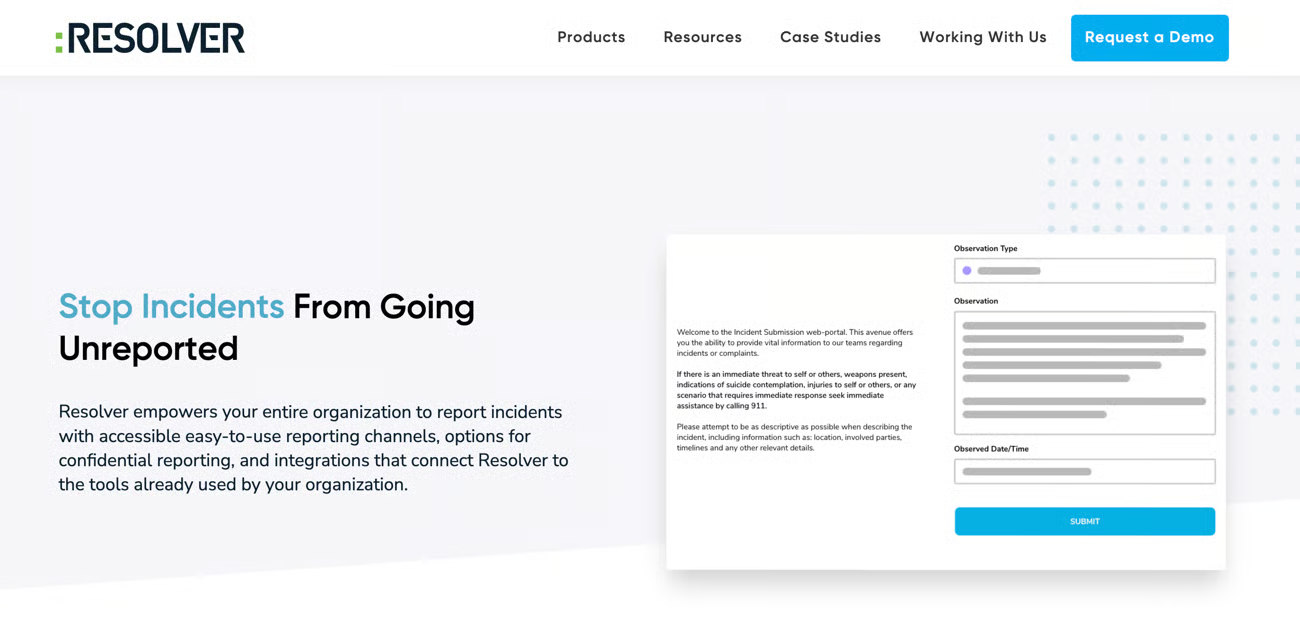
Resolver is the "Enterprise Fortress." It is built for massive corporations that need to manage not just IT incidents, but physical security and compliance risks. It features an "Incident Portal" that makes it easy for non-technical employees to report issues.
➕ Advantages
- AI Triage: Automatically tags and categorizes incidents to identify long-term trends.
- Customization: Almost every part of the reporting engine can be tailored to a specific corporate workflow.
💲 Pricing
Strictly enterprise-quoted; usually out of reach for small startups or independent developers.
9. Datadog Incident Management
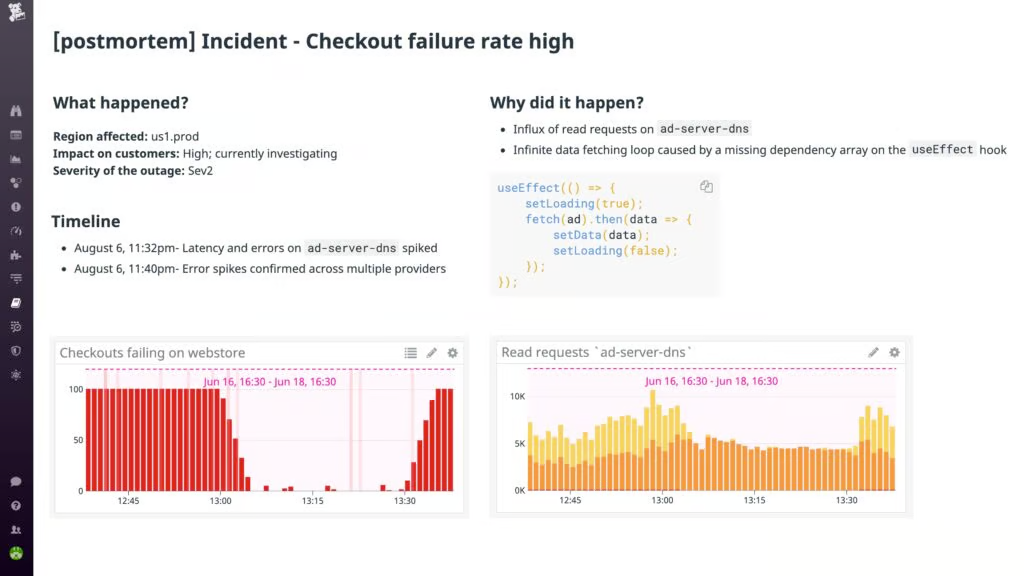
If you are already paying for Datadog's metrics and traces, their Incident Management module is a logical extension. It allows you to transform a spike on a graph into an official incident with one click.
➕ Advantages
- Collaborative Notebooks: Teams can co-edit post-mortems in real-time within the Datadog UI.
- Unified Ecosystem: No "context switching" between your monitoring tool and your incident tool.
➖ Limitations
- Some integrations (like Slack) have historically felt less mature than native incident tools.
💲 Pricing
Integrated into the broader Datadog pricing; usually billed per incident or as a part of the Pro/Enterprise tiers.
10. xMatters
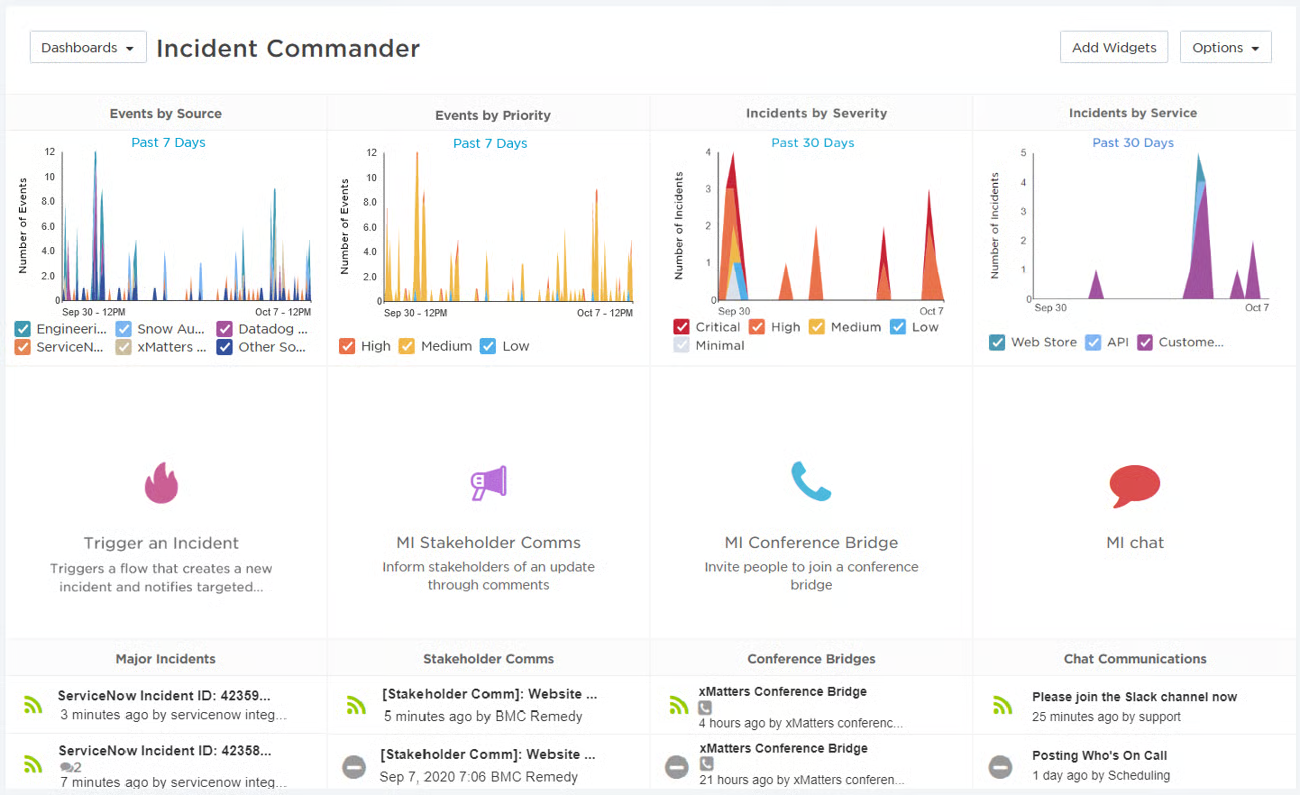
xMatters is a favorite for those who need a high-functioning Free Plan. It offers a surprisingly deep set of features for $0, including incident timelines and team management, making it the perfect "gateway" tool for teams moving away from manual email alerts.
➕ Advantages
- Generous Free Tier: One of the best on the market for small teams.
- Workflow Builder: A visual drag-and-drop tool to automate response steps.
➖ Limitations
- Phone call notifications are often gated behind higher-tier paid plans.
💲 Pricing
Free for small teams; paid plans start at $9/user/month, with high-tier "Incident Management" plans at $39/user/month.
Final Comparison
| Tool | Best For | Entry Price |
|---|---|---|
| FluidifyAI Regen | On-call, incident coordination & AI post-mortems | Free |
| New Relic | Full-Stack Observability | Consumption-based |
| Opsgenie | Atlassian/Jira users | $9/user/mo |
| OnPage | "Must-Read" critical alerts | Custom |
| AlertOps | Heartbeat & Task monitoring | $5/user/mo |
| FireHydrant | Process & Change tracking | Annual only |
| PagerDuty | Large-scale noise reduction | $21/user/mo |
| Resolver | Corporate Security & Compliance | Enterprise only |
| Datadog | Users already in the DD ecosystem | Usage-based |
| xMatters | High-value Free tier | $9/user/mo |
Conclusion
Splunk On-Call remains a heavy hitter, but the "one-size-fits-all" enterprise approach isn't for everyone. Whether you need the self-hosted, no-per-seat flexibility of FluidifyAI Regen or the workflow automation of xMatters, the 2026 landscape offers plenty of ways to escape the "dead" VictorOps legacy and build a more resilient response strategy.
A note on pricing: the rates referenced above reflect each vendor's publicly published pricing as of October 2026. Vendors change pricing without much notice, so confirm current rates on the vendor's own pricing page before making a purchasing decision.